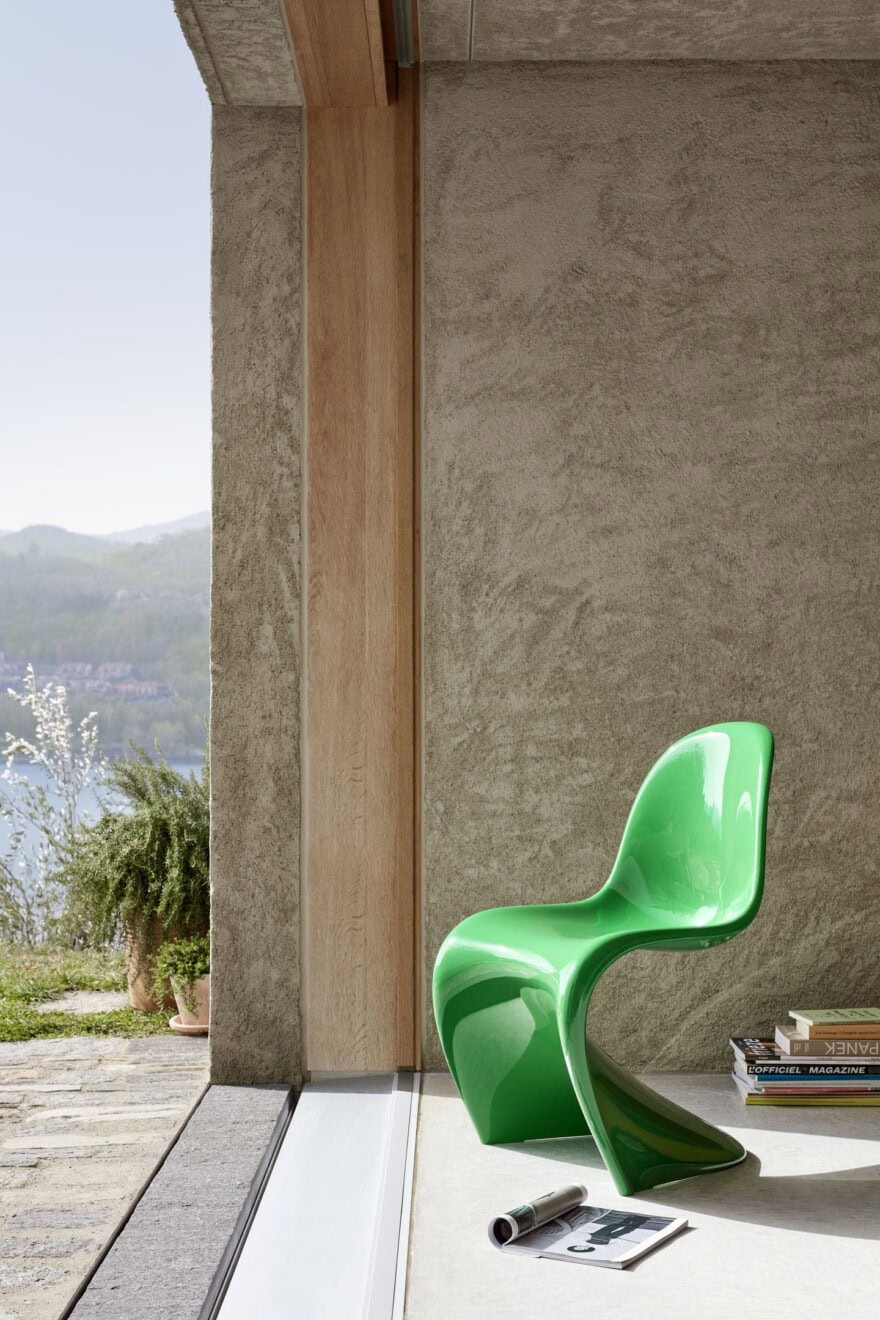
Finally developed by Vitra for serial production in 1967 – seven years after Panton first designed it – the world’s first once-piece, moulded plastic chair was officially launched to market. However, technology limitations at the time led to several modifications to the original design, most notably a series of ridges between the base and seat. The material subsequently aged and weathered more quickly than was initially assumed, causing chairs to break, which threatened Vitra’s image. As a result, production for the chair was discontinued in 1979 but interest in its unique design continued over the years, and Vitra resumed production again in 1990 – with rigid polyurethane foam providing a much greater resistance to breakage.
Still considered to be one of the great masterpieces of Danish design, it was named in the Danish Culture Canon in 2006, has received numerous international awards, and can now be seen on display at many museums worldwide. Continually updated by Vitra through decades of plastic technology innovations, the manufacturer issued two limited edition designs to celebrate fifty years since the chair’s first launch – 666 pieces of ‘Panton Chrome’ boasting a dazzling mirrored chrome surface, alongside 333 ‘Panton Glow’ chairs, made with a bright, fluorescent finish. With such an expressive form and striking sculptural shape, the Panton Chair has unsurprisingly battled through its manufacturing setbacks to become one of the most iconic designs of the Twentieth Century.